Every day, thousands of new liquidity pools launch across Ethereum, Solana, Base, and dozens of other chains. Some are legitimate, but many are carefully designed to look that way. Rug pulls, honeypots, and pump-and-dumps have cost crypto traders billions, and they rarely announce themselves. The warning signs are often buried in on-chain data, and most traders don't know how to read them.

Step-by-Step Guide: How to Check if a Pool is a Scam using GT Security Tools
Step 1: Check the GT Score of a Pool
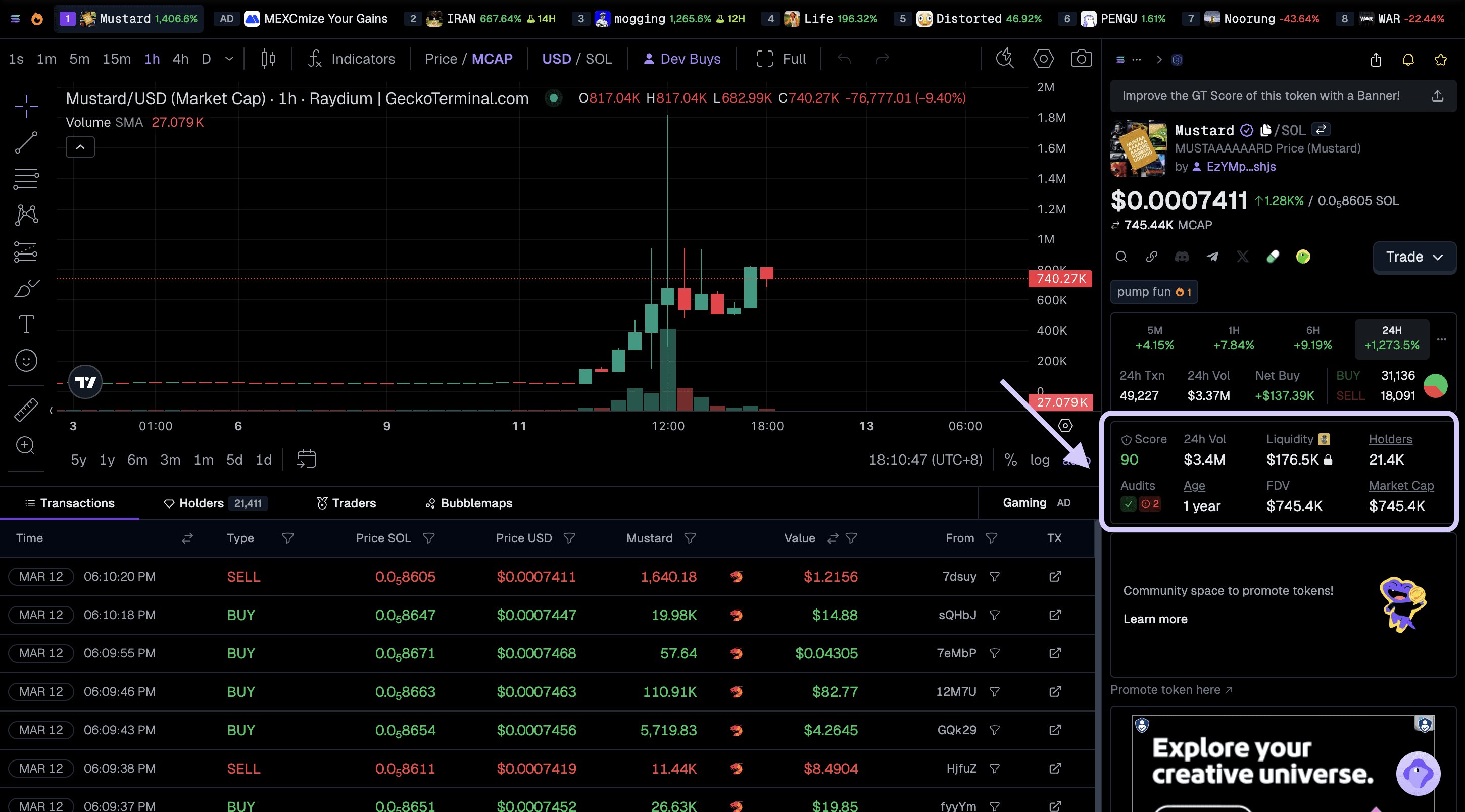
Navigate to any pool page on GeckoTerminal. Look at the right-hand sidebar and you'll see the GT Score displayed at the market stats section.
What to look for:
High GT Score (80-100): Generally indicates a healthier, more established project
Low GT Score (0-50): Red flag, proceed with extreme caution or avoid entirely
The GT Score aggregates multiple on-chain and off-chain data points to give you an instant health check of the project, saving you hours of manual research.
Step 2: Check Developer Wallet Activity
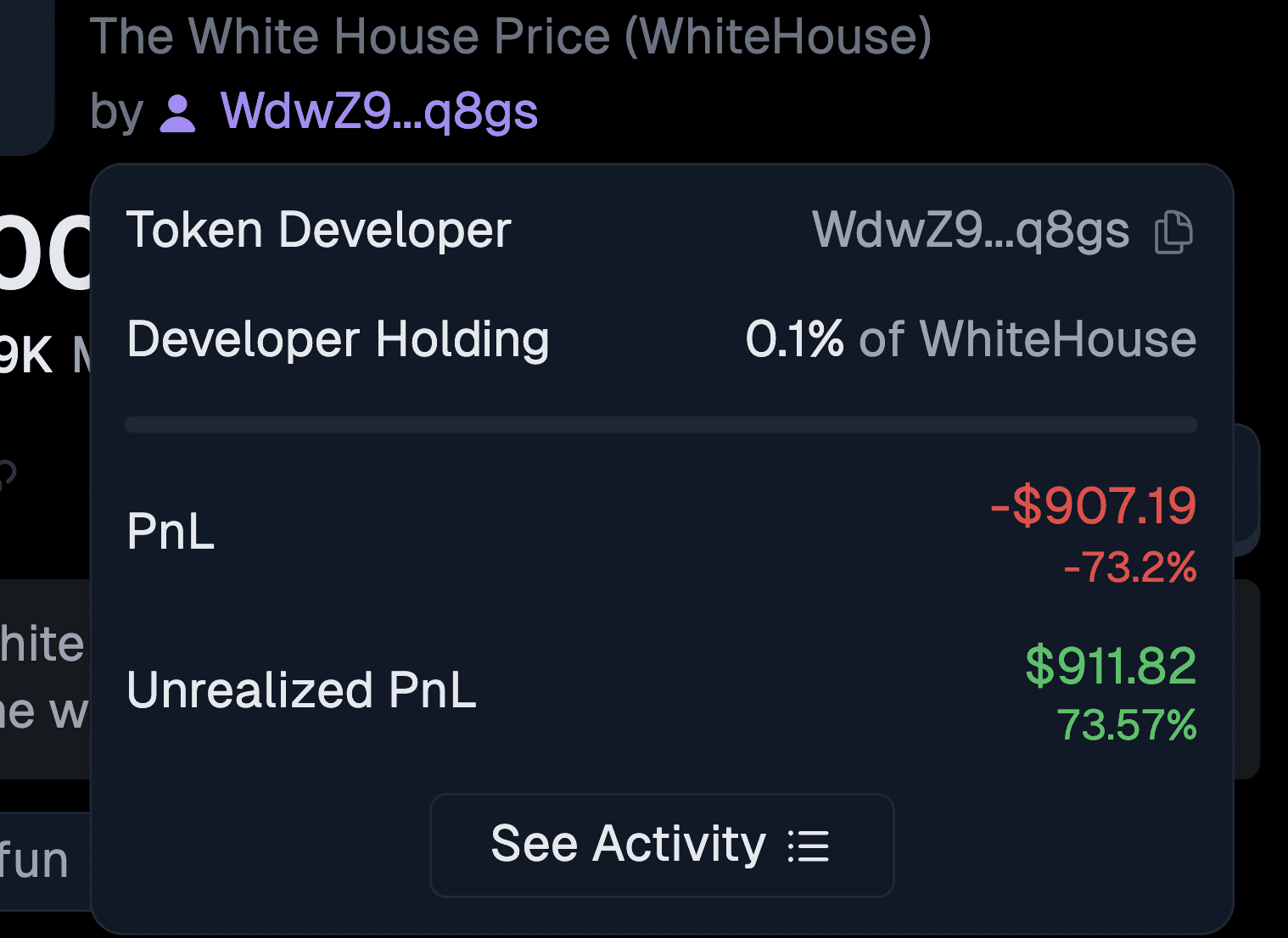
For pools on the Solana and Base chain, GeckoTerminal displays the Dev Wallet info on the pool page. This feature allows you to track whether the developer has been buying or selling their token.
Why this matters:Developer wallet activity can be a valuable signal of the team’s confidence in the project. If the developer continues to buy or hold tokens, it may suggest conviction and long-term commitment. If the developer is selling tokens, it could indicate reduced confidence or a potential exit, but note that for meme coins or highly speculative tokens, it’s normal for creators to exit early for quick profit.
Step 3: Check Pool Creation Date
In the pool info section on the pool page, hover over "Age" and you'll see a tooltip with the timestamp showing the exact date and time the pool was established.
Why newer pools are riskier: Scammers create pools, generate artificial hype, attract victims within hours or days, then disappear. Established pools with weeks or months of trading history have proven they're not immediate rug pulls (though always stay vigilant).
Bonus tip: Compare the pool creation date with the token's social media accounts and website domain registration. If a project claims to have been around for months but the pool was just created yesterday, something doesn't add up.
Step 4: Review Security Audits
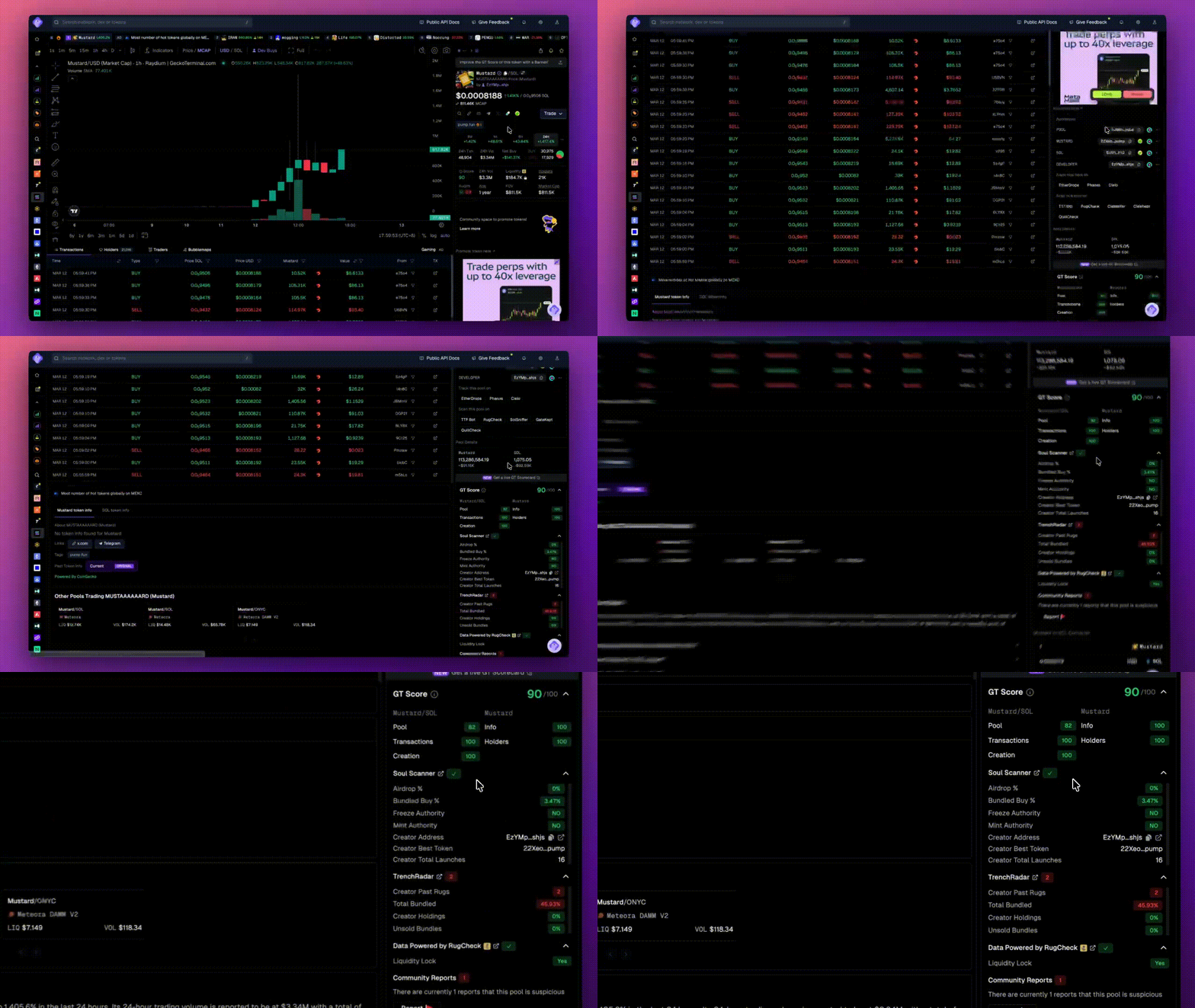
On the same pool page, scroll down to the security section where you'll find audit results from integrated third-party tools. GeckoTerminal shows scans from GoPlus Scan, De.Fi Scanner, Soul Scanner, and more.
Some of the red flags to watch for:
Honeypot detection (you can buy but can't sell)
Hidden minting functions
Proxy contracts that can be modified
Tax manipulation capabilities
Transfer pausable functions
Step 5: Analyze Total Holders and Examine Holder Distribution
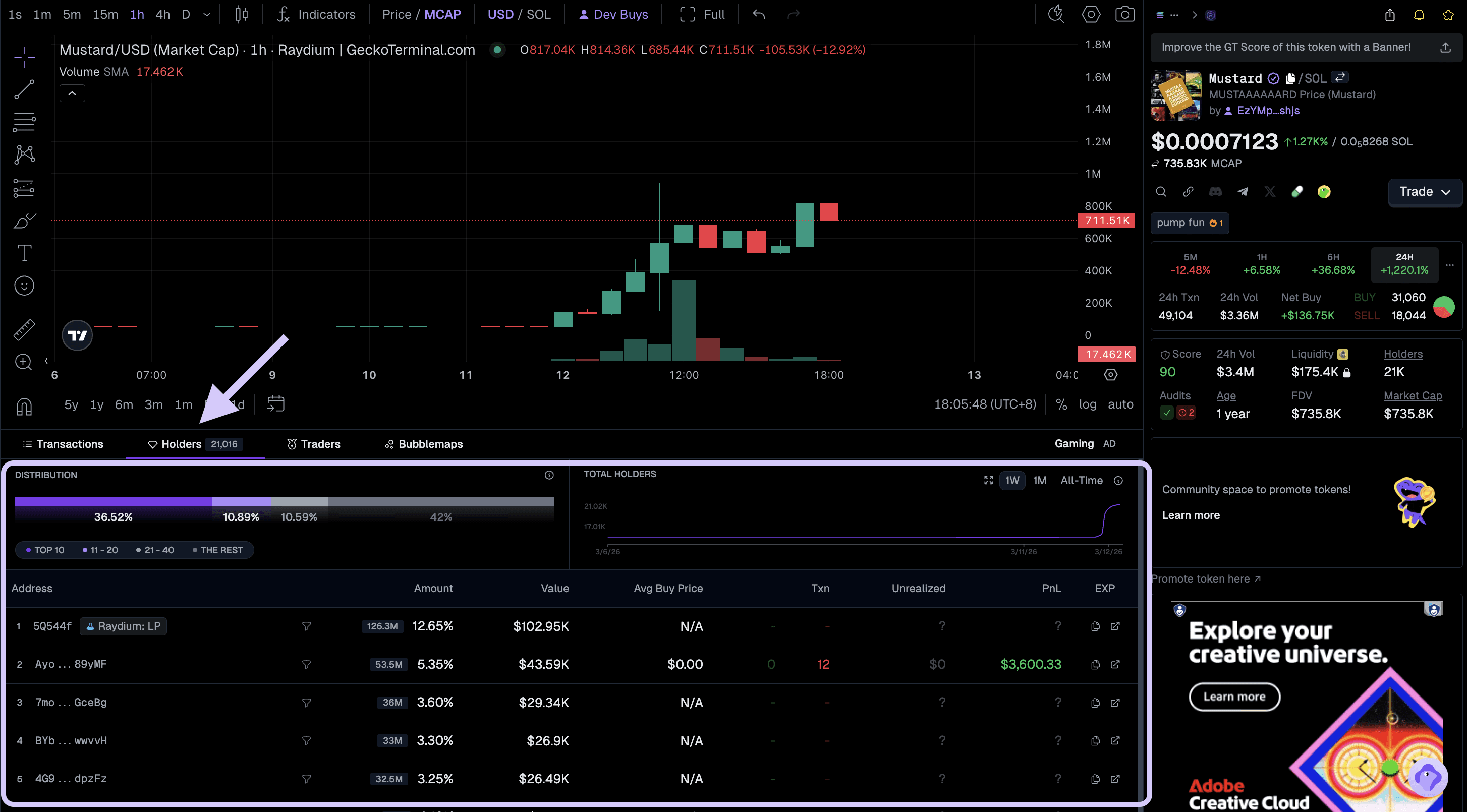
Look for the Holders section below the price chart. This shows a breakdown of the top token holders and the percentage of total supply they control.
Why does this matter? Highly concentrated ownership means a few wallets can significantly impact the price. In extreme cases, this can lead to rug pulls where developers or large holders dump their tokens, leaving retail traders with worthless assets.
However, a high holder count alone doesn’t always mean the distribution is healthy. Sometimes tokens appear widely distributed, but many wallets may actually be linked together as clusters. The Cluster % metric helps identify wallets that have transfer activity with each other (directly or through intermediaries), which may indicate coordinated control over multiple wallets.
Another metric to watch is Sniper %. Snipers are wallets that buy tokens immediately at launch, often at the lowest possible price. A high sniper percentage can be a potential red flag, as these early buyers may hold large profits and could sell quickly, causing sharp price swings.
By reviewing holder distribution alongside metrics like Cluster % and Sniper %, you can get a clearer picture of whether a token’s ownership is genuinely decentralized or potentially manipulated.
Healthy distribution looks like:
Top 10 holders does not own half of the supply combined
Ownership should be well-distributed across all holders rather than concentrated in a few wallets
No single wallet controlling a significant amount of supply (Excluding expected large wallets like DEX pools, CEX wallets, and token lockers)
Red flags:
Few wallets controlling majority of total supply
Creator wallet holds a large share of tokens: This may indicate the creator is bullish on the project or reserving tokens for future purposes like airdrops or treasury use. While not inherently negative, concentrated holdings can pose risk if the tokens are not locked or transparently allocated.
Scam pools typically have suspiciously low holder counts because they're designed to trap a few victims before disappearing.
Why Use GeckoTerminal to Check for Scam Pools Before Trading
All Your Security Checks in One Place
Instead of jumping between five different websites, blockchain explorers, and security scanners, GeckoTerminal centralizes everything. One dashboard gives you GT Score, audit results, holder data, liquidity status, and pool age, saving you time and reducing the chance you'll miss a critical warning sign.
Real-Time On-Chain Data
GeckoTerminal pulls live blockchain data, so you're seeing the current state of the pool, not outdated information.
Trusted by the Crypto Community
As part of the CoinGecko ecosystem, GeckoTerminal brings the same reliability and comprehensiveness that millions of traders trust daily. When you're trying to avoid crypto scams, reputation matters.
Free and Accessible
All these security features are completely free. You don't need a premium subscription to protect yourself from fake cryptocurrency schemes. GeckoTerminal believes everyone deserves access to the crypto advice and tools needed to trade safely.
Covers Multiple Chains
Whether you're trading on Ethereum, BSC, Solana, Arbitrum, or dozens of other chains, GeckoTerminal's security tools work across ecosystems.
Check the GT Score of your token now!